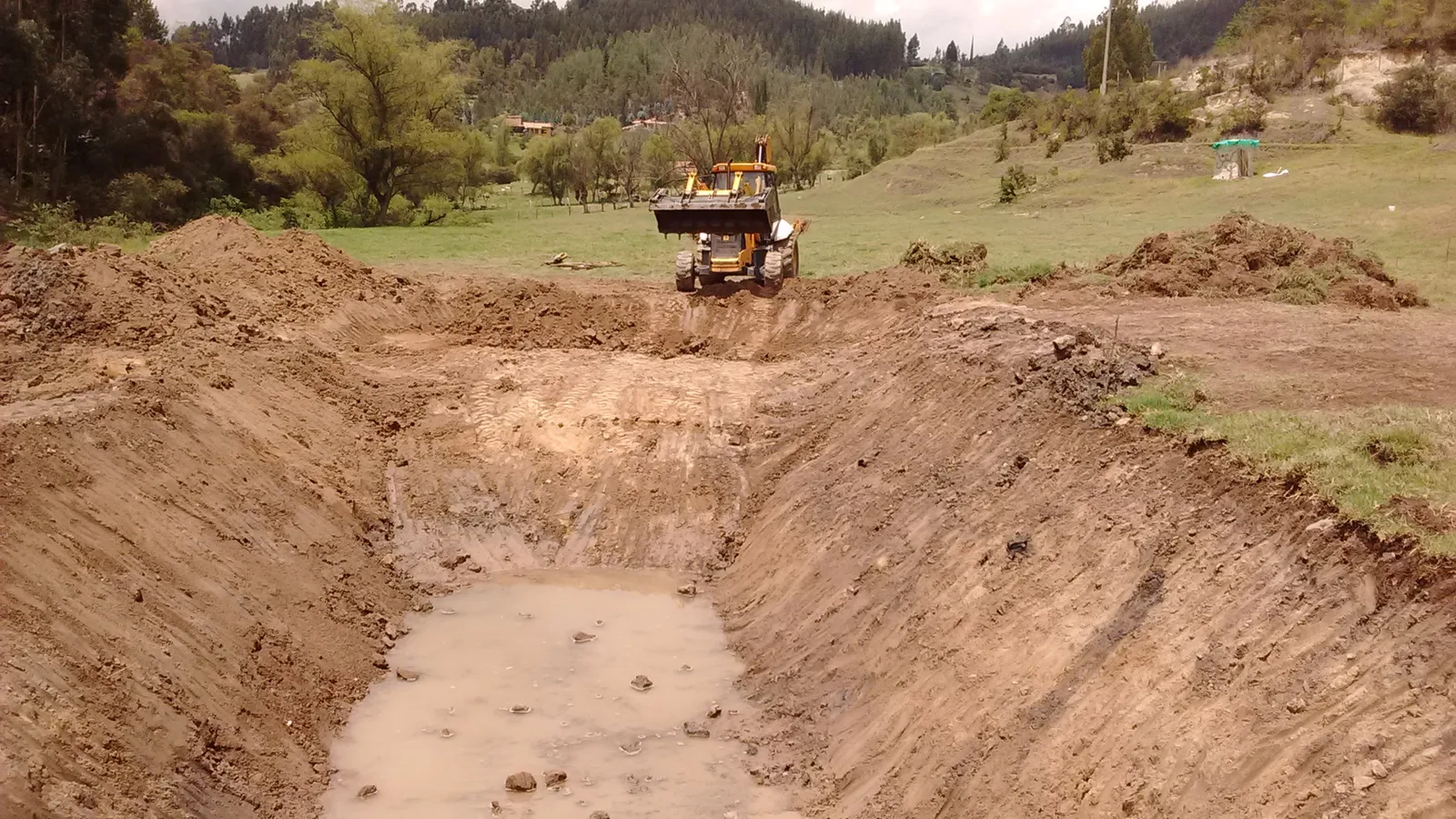
How Much Does It Cost to Build a Pond in Texas?
A real ranch pond in Texas usually costs somewhere between $3,000 for a small stock tank on open pasture and $50,000 or more for a finished one-acre fishing pond, and the honest way to price one is by the cubic yard of dirt moved. Most numbers you will see online blend backyard koi ponds into the averages, which makes them useless for ranch work. Here is the math that actually holds up.
Digging ponds and lakes is the work we like best at our pond and lake construction service, so these are the numbers we live with.
The only pricing unit that travels: dollars per cubic yard
Pond quotes are earthwork quotes. Larger pond excavation in the current national guides runs roughly $1.50 to $4.00 per cubic yard, and federal conservation programs value pond earthwork in the same single-digit-per-yard territory. Every honest pond price decomposes into yards moved times a rate, plus whatever the site adds.
That gives you a tool nobody’s “average pond cost” article gives you: size your own job.
| Step | Math |
|---|---|
| One acre-foot of water | 1,613 cubic yards |
| A 1-acre pond averaging 8 ft deep | about 12,900 cubic yards |
| At $1.50 to $4.00 per yard | roughly $19,000 to $52,000 |
| A 1/4-acre pond averaging 10 ft deep | about 4,000 cubic yards |
| At the same rates | roughly $6,000 to $16,000 |
Cross-check: an East Texas pond builder publishes a $9,000 starting price for a quarter-acre pond at 10 to 12 feet deep, which works out to about $2.20 per yard, right inside the range. And Texas builders quoting finished one-acre fishing ponds at $30,000 to $50,000 sit inside the same bracket the yardage math produces. Two unrelated methods, one answer. That is what a trustworthy range looks like.
What moves the number on any site
The spread between a cheap pond and an expensive one is the site, not the acreage. Real quotes swing on:
- Depth. Deeper water costs more yards but survives Texas summers.
- What the digging hits: clean clay digs and seals; sand streaks need lining work; rock, common in the Hill Country, wrecks budgets.
- Dam and spillway complexity, mostly a factor on creek and valley sites.
- Access for equipment and trucks.
- Where the spoil goes, which deserves its own section below.
Public examples show how wild the swing gets: Texas landowners have reported a 7-acre tank built for less than what another paid for a tank a fifth that size on harder ground. Acreage was not the difference. The dirt was.
The flat-country factor: where does the dirt go?
Gulf Coast prairie changes the pond equation. Around Fort Bend, Brazoria and Wharton Counties there are no valleys to dam, so most ponds here are dug pit ponds. Less dam engineering, more excavation, and one question that quietly controls the budget: what happens to thousands of yards of spoil on a flat site?
You have three options. Shape it on site into pads, levees or buildup, haul it away, or let it sit in ugly piles forever. Hauling is where flat-country pond budgets usually blow up, because it turns a digging job into a trucking job.
This is where our setup changes the economics. We run our own tandem dump trucks, and dug material has value to us as pit inventory, so spoil that would be a disposal cost on another builder’s quote can move as material on ours. On the right job that swings real money.
Permits: mostly a non-issue, worth two minutes
Most ordinary ranch ponds in Texas need no state water-right permit: the law allows a pond up to 200 acre-feet of storage for domestic and livestock purposes on your own property, with conditions attached. Dam safety rules run on a separate track and mostly touch larger dammed impoundments, where engineering becomes a real line item. A dug pasture pond rarely sees any of it. The full rules, statute text included, are in our guide to pond permits in Texas.
Pricing a pond without guessing
Run the yardage math above and you will land within shouting distance of any honest quote before a builder ever visits. The firm number still comes from the ground: the soil, the access, the depth you want, and where the spoil goes.
If the pond is going in anywhere southwest of Houston, call (281) 750-6510. We will look at the site, read the soil, and quote the dig with the machines, trucking and dirt handled by one outfit.