Serving Rosharon, TX
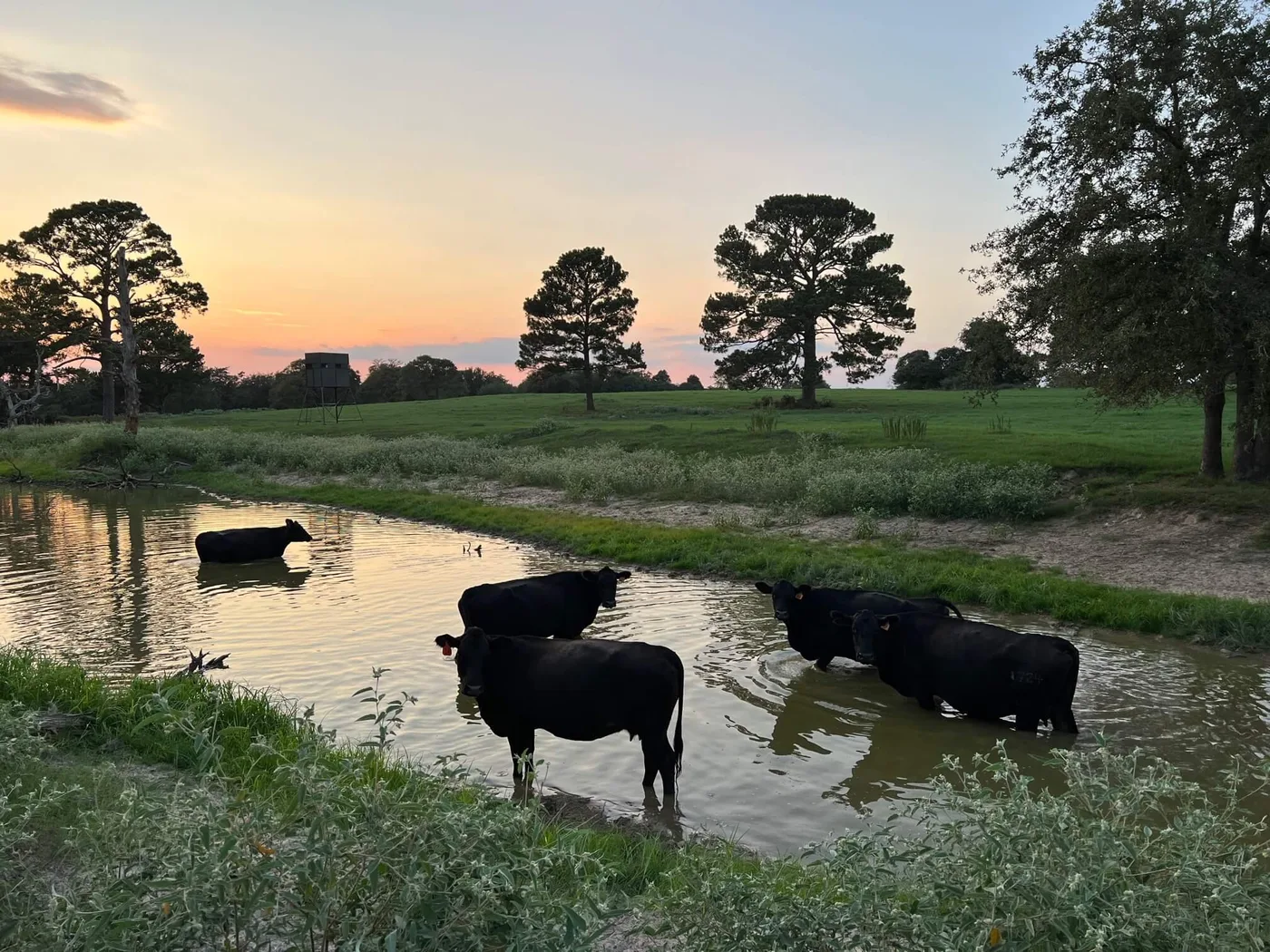
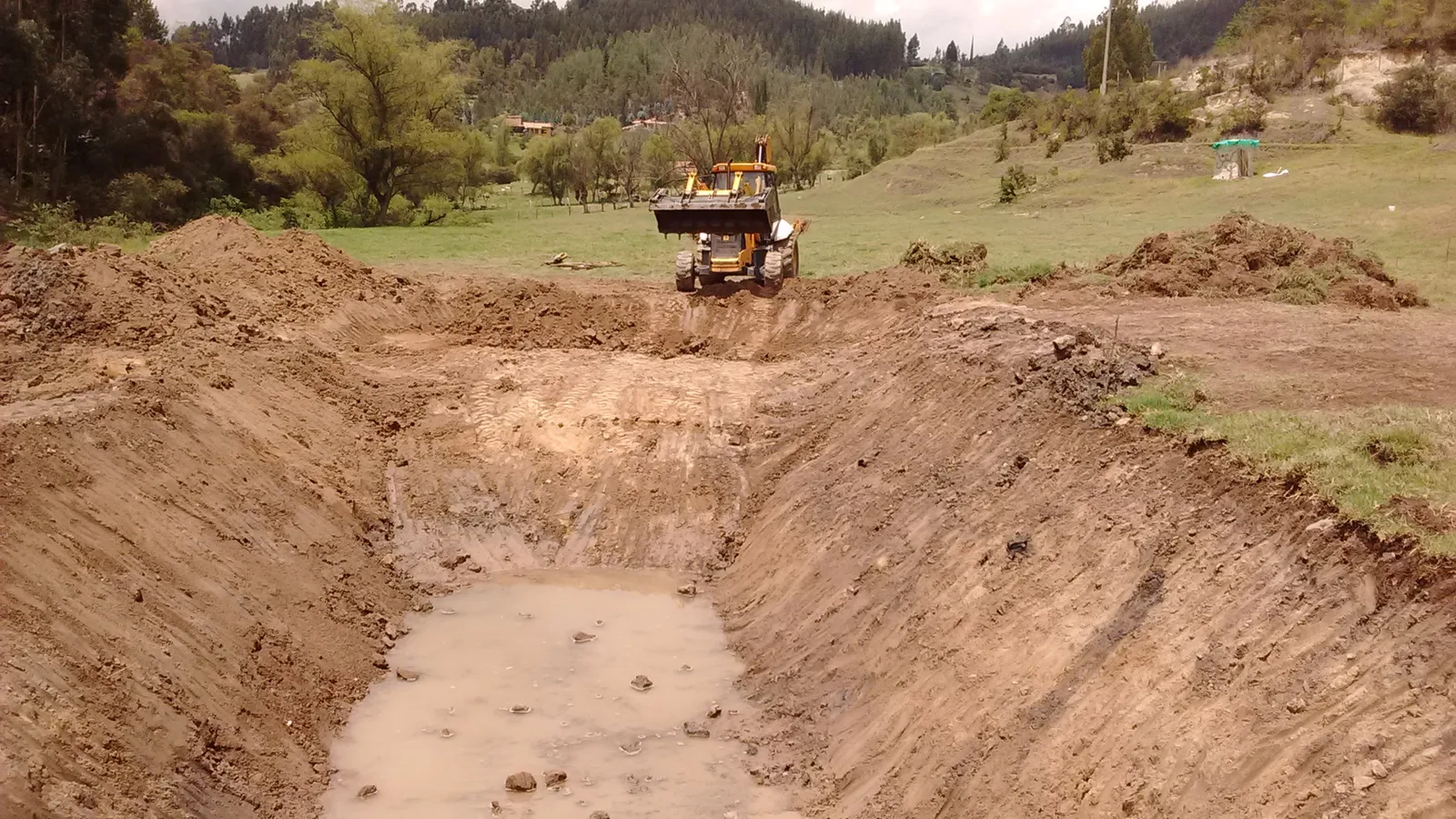
We build ponds and lakes on acreage around Rosharon, Texas. Rosharon sits on flat coastal prairie in northern Brazoria County, and the ground here is heavy clay. That clay is the reason ponds hold water in this area. Lake Charles clay and the soils near it are very slowly permeable, which is exactly what a pond wants. Dig a bowl in it, shape the banks, and the water stays. Owners on five and ten acre tracts call us for stock ponds. Larger ranch places want a lake. We dig both with large excavators and move the spoil with our own trucks.
Pond work is dirt work at scale. A one acre pond dug six feet deep moves up to about ten thousand cubic yards. That is hundreds of truckloads if the dirt has to leave the property. Most of the time it does not need to, because the spoil has a job right there. Our smallest excavators run about 50,000 pounds, which is the weight class this work takes. Pond projects start at about ten thousand dollars.
Tell us about your project — we’ll get right back to you.
Brazoria County sits in the Gulf Coast prairie. Soils here are clays and clay loams, and the Lake Charles series runs through much of the flat ground. That soil is deep, clayey and very slowly permeable. Water moves through it slowly, which is a headache for drainage and a gift for a pond. Sandy ground leaks. Clay ground holds. Before we dig, we open test holes to see what is under the surface at your site. What comes out of those holes shapes the whole plan.
Every acre is a little different. Old river bottom nearer the Brazos carries sandier lenses the river left behind. A pocket of sand under a pond bottom will drain it over a season. When we hit that, we line the bottom and banks with clay pulled from elsewhere on the property. That is one more reason to dig with equipment big enough to move real volume. A pond that holds through August is worth more than a pond that fills fast in April.
Size starts with what the pond is for. A stock pond for cattle can be under an acre and still do its job. A pond meant to carry fish through a dry summer needs depth, commonly eight feet or more in part of the bowl. A lake built for looks and for fishing gets varied depth and an irregular edge. We talk through the use, then set surface area and depth before the first bucket comes out. Changing that plan halfway costs real money.
Bank slope is the part owners forget. Steep banks cave in, and shallow banks grow weeds across the whole edge. We cut a shelf near the water line, then drop off to depth. Spoil goes on the low side to form a levee where the land has any fall at all. On ground this flat, the levee often is the elevation. We also cut an overflow, so a big rain leaves the pond where we want it to.
Digging a pond makes a mountain of dirt. On acreage, that dirt is an asset sitting right where you need it. It builds a homesite pad above the surrounding grade. It raises a driveway or a barn site out of the mud. It fills the low spots that hold water in the yard after every rain. Hauling it off comes last, because trucking costs money and the material is already on your land.
Placement gets planned before we dig. Spoil is heavy, and moving it twice costs twice. We set the pad location, the levee line and the haul route first, then dig to that plan. If the site cannot use all the dirt, our trucks take the extra away. It can go to another job or back to one of our pits. Owning the trucks and the pits is what makes that easy to sort out.
From the first look at the ground to the last pass of the grade, here is exactly how it goes.
We meet you at the property and read the job off the ground itself: what is growing, where water sits, how trucks and excavators get in. Big dirt work prices off what is really out there.
You get a free quote with a real number and a real plan: what gets dug or cleared, how many loads move, where the dirt comes from or goes. It holds unless the scope changes.
The equipment shows up when we said. Excavators dig, trucks run in rotation, and on deadline jobs we run shifts around the clock until the volume is moved.
The last pass matters as much as the first load. Pads compacted and holding elevation, ponds shaped and ready for water, ground graded so it drains. We look at the finished work with you before we leave.
What Rosharon property owners ask us most about ponds & lakes. Don't see yours? Give us a call — we're happy to help.
A pond you have been putting off, a pad that needs building, land that needs clearing, or a job that needs truckloads of select fill? Call or send the form. Tell us where the property is and what you want the land to do, and we will set a time to come look at it.
Tell us about your project — we’ll get right back to you.