Serving Wharton, TX
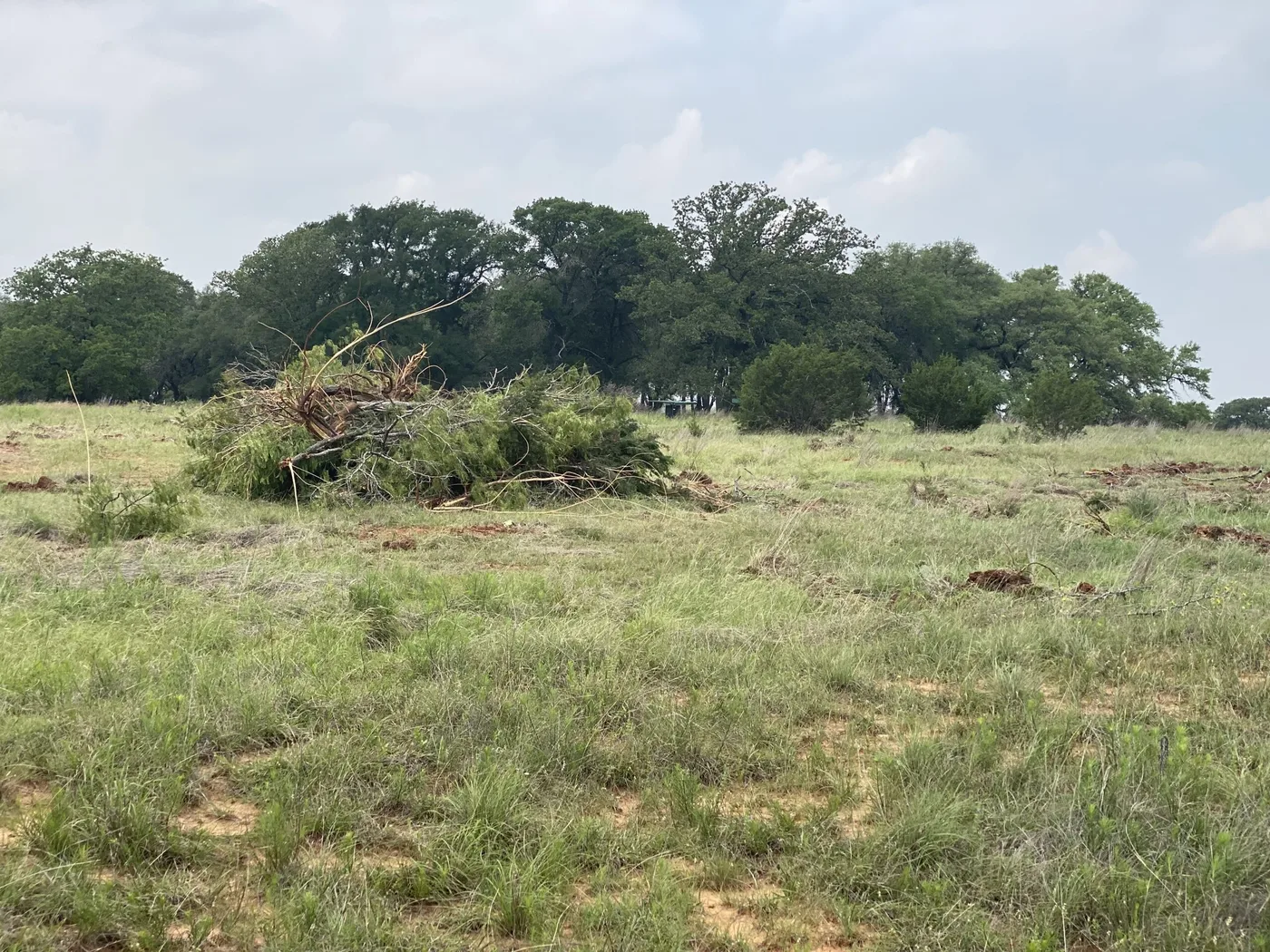
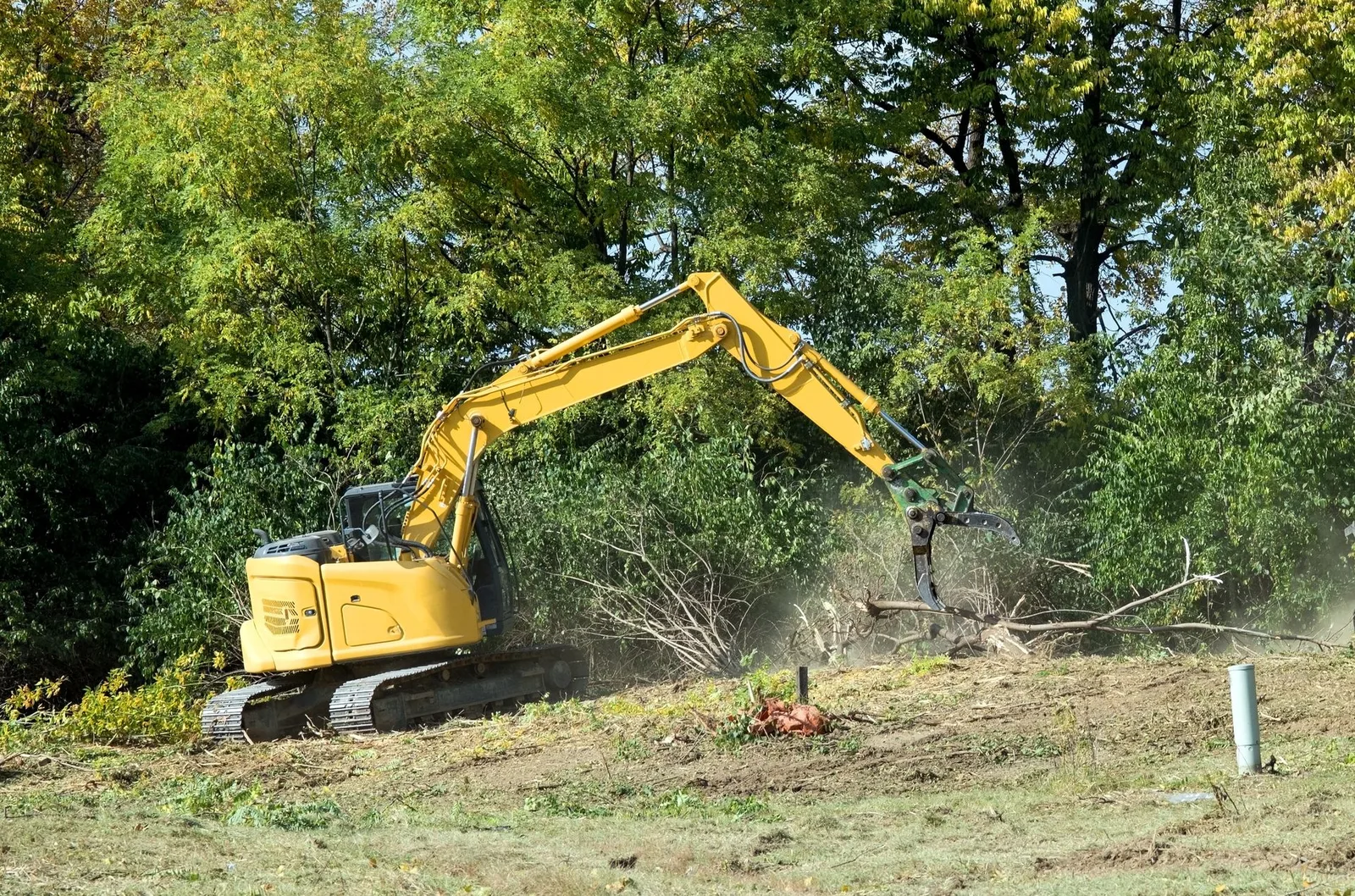
RLS Land Solutions does land clearing in Wharton, Texas and across Wharton County. Land near the Colorado River grows back fast. Hardwood, vine and Chinese tallow fill the bottoms, and mesquite and huisache take the open pasture. We clear it with excavators that start at 50,000 pounds and go up from there. Trees get pushed over and the root ball comes out with the trunk. The material goes into our tandem dump trucks and down to our own green waste dump site. What is left is open ground with the holes filled. Most of our Wharton land clearing is priced by the acre, and jobs start around $10,000.
Wharton County is farm and cattle country. Rice, cotton, corn and sorghum work the open ground, and cattle work the pasture. Brush costs you either way. It takes grazing acres out of production and it creeps into field edges every season. Clearing it is a dirt job as much as a tree job. When the trees come out, the ground underneath needs smoothing before it is worth anything. We do both parts in one trip with the machines already on site.
Tell us about your project — we’ll get right back to you.
The bottoms along the Colorado are the hardest ground to clear in this county. The soil is deep and soft. The timber is big, and vine ties it all together. A machine has to have weight to work in there. Ours start at 50,000 pounds, which is enough to get under a hardwood and lay it over. The root ball lifts with the trunk instead of tearing off. That matters in bottom ground, because a root left in soft soil rots and leaves a hole. We fill those holes as we go.
Access is the other bottom land problem. River tracts often have one way in, and it is usually soft. We build a working path before the clearing starts so the trucks can get loaded and out. Wet season changes the plan. Bottom ground near the river holds water for days after a good rain, so we watch the weather and time the haul. Some tracts clear best in late summer when the ground is firm. If a tract has to be cleared on a set date, we bring more machines instead of waiting on dry weather.
Cattle ground around Wharton loses acres to brush every year. Mesquite and huisache seed into grazing land and thicken up fast. Macartney rose runs the fence lines and the wet low spots. Once brush closes in, cattle quit using that part of the pasture. Clearing puts those acres back to grass. We clear pasture by pushing and digging, so the roots leave with the plant. Cutting the tops off buys a season or two and then it comes back thicker. Pulling roots is what makes the money spent last. Ranchers here usually clear in blocks, a pasture at a time.
Pasture clearing has to leave ground a tractor can cross. We knock the spoil down behind the machines and fill the root holes. Then the surface gets smoothed so a shredder or a hay cutter will not find a hole. Brush piles get loaded and hauled to our dump site. On dry tracts some owners would rather burn, and burning can cut the cost. Burn bans come and go in this county, so we check before we plan on fire. Either way the pasture is clean and seedable when we pull off.
Row crop ground in Wharton County loses width at the edges. Tree lines along ditches and turn rows creep in a few feet a year. Shade cuts yield on the outside rows, and roots pull water from the crop. Clearing the edge back gives you those rows again. We take the tree line out with an excavator and haul the material off. The ditch bank gets shaped so water still runs where it should. Farmers usually do this between seasons, when the ground is bare and firm. Timing it that way keeps the machines off wet dirt.
Fence lines are the other standing job on a farm tract. Brush grows into the wire until you cannot see the corner posts or fix a break. We clear a working width down the line so the fence can be rebuilt or maintained. Same machine, same trip. Most Wharton County tracts have more than one of these jobs waiting. On bigger tracts we open corridors for ranch roads at the same time, since the machines are already there. Owners usually bundle the work that way, because one move in covers all of it.
From the first look at the ground to the last pass of the grade, here is exactly how it goes.
We meet you at the property and read the job off the ground itself: what is growing, where water sits, how trucks and excavators get in. Big dirt work prices off what is really out there.
You get a free quote with a real number and a real plan: what gets dug or cleared, how many loads move, where the dirt comes from or goes. It holds unless the scope changes.
The equipment shows up when we said. Excavators dig, trucks run in rotation, and on deadline jobs we run shifts around the clock until the volume is moved.
The last pass matters as much as the first load. Pads compacted and holding elevation, ponds shaped and ready for water, ground graded so it drains. We look at the finished work with you before we leave.
What Wharton property owners ask us most about land clearing. Don't see yours? Give us a call — we're happy to help.
A pond you have been putting off, a pad that needs building, land that needs clearing, or a job that needs truckloads of select fill? Call or send the form. Tell us where the property is and what you want the land to do, and we will set a time to come look at it.
Tell us about your project — we’ll get right back to you.