Serving Wharton, TX
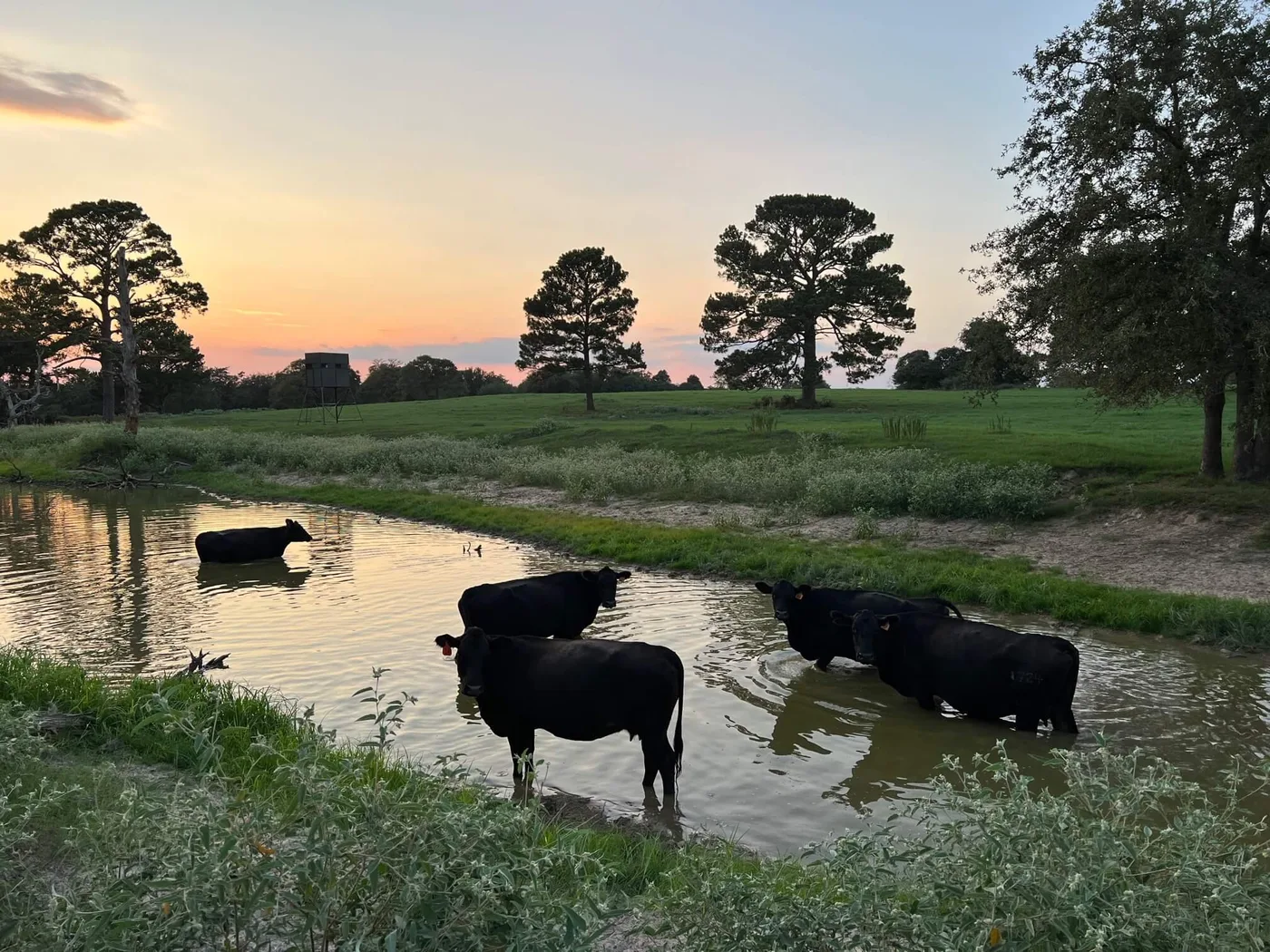
RLS Land Solutions builds ponds in Wharton, Texas and on ranches across Wharton County. We dig stock tanks, ranch ponds and larger lakes with excavators that start at 50,000 pounds. A pond is a dirt job with a water plan attached. The hole has to hold water, and the banks have to stay put. The dirt that comes out has to go somewhere useful. We handle all of it with our own machines and trucks. Wharton County ground gives us a lot to work with, since much of it is clay and alluvial soil. Most of ours get dug for cattle water or for a place to fish. Pond jobs here start around $10,000.
Wharton County runs cattle, hay, rice and row crops. Water is part of running any of it. A stock tank in the right spot keeps cattle out of a creek and off a long walk. A bigger pond near the house does double duty for fishing and for looks. Ranch owners here also use ponds to catch runoff that used to sit in a low field. Where the pond goes matters as much as how it is built. We look at the land before we pick a spot.
Tell us about your project — we’ll get right back to you.
The first question on any pond is where the water comes from. Most ranch ponds in this county fill from runoff off the surrounding ground. That means we look at how the land falls and what drains toward the spot. A pond in a natural low place fills faster and works less. A pond on high ground needs a bigger catchment above it. We also look at what is downhill, since a bank holds a lot of weight once the pond is full. Placement costs nothing to get right and a lot to get wrong.
Soil is the second question. Wharton County soils run to loam, coastal clay and alluvial ground near the river, with sand mixed in. Clay is what you want in a pond bottom, because it seals. Sand is the problem, since water leaves through it. Ground close to the Colorado can have sand layers under the surface that do not show from the top. We dig test holes before committing to a spot. If the clay is there, we use it. If it is thin, we can haul clay in from our pits and build a liner out of it.
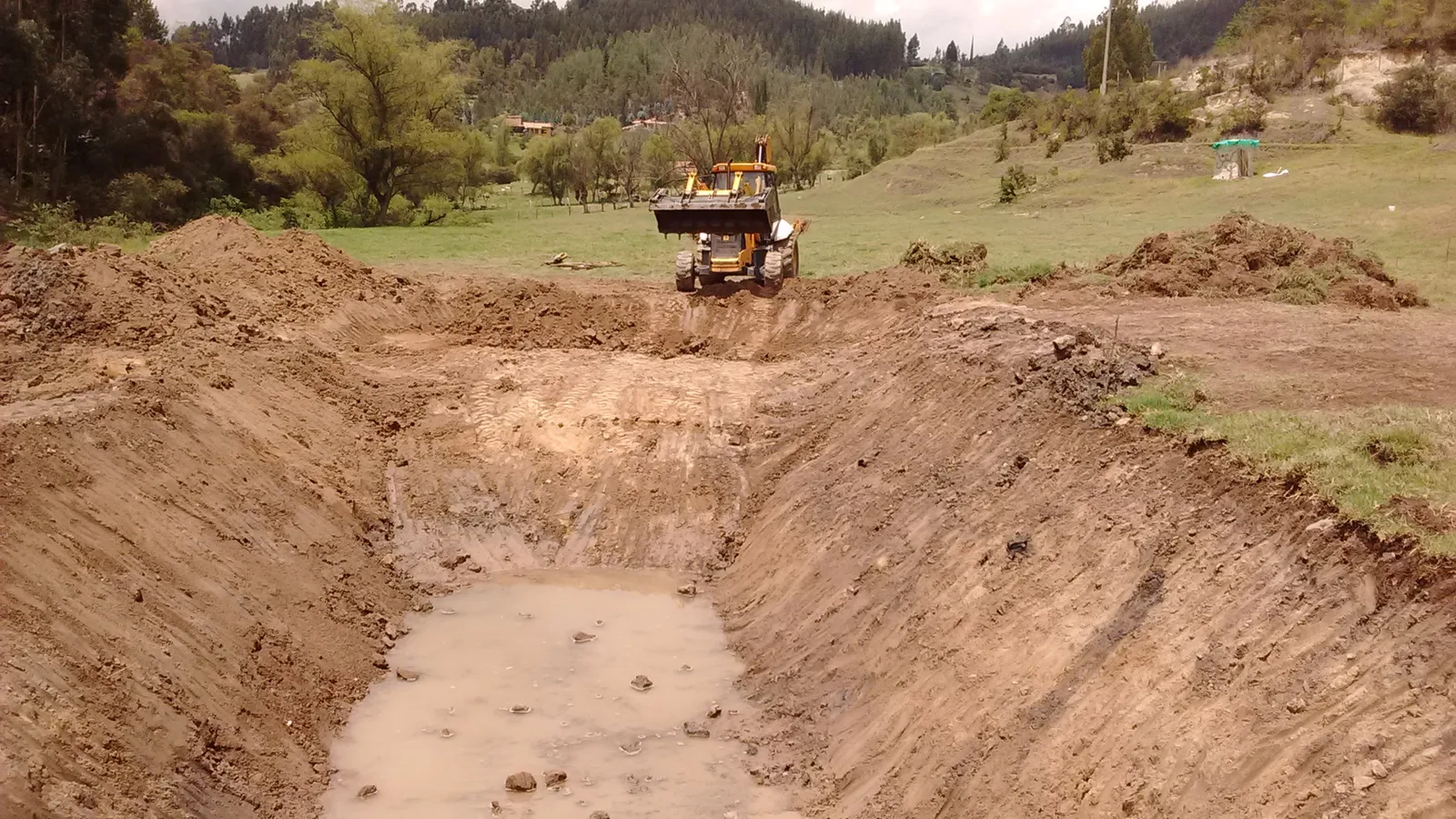
Digging starts with stripping the topsoil off and setting it aside. Topsoil does not belong in a dam or a bank. Under it we cut a core trench through the length of the dam and pack clay back into it. That trench is what stops water from running under the dam later. Then the pond gets dug to depth in layers. Deeper water stays cooler and grows less weed, so most stock ponds in this country go eight to twelve feet in the deep end. The dirt from the hole builds the dam as we go.
Bank slope is what makes a pond last. Steep banks cave in and turn into mud. We lay the banks back at a slope that holds grass and stands up to cattle. On fishing ponds we leave a shelf in shallow water and a drop off past it. The dam gets built in packed lifts and topped with the soil we saved. We shape a spillway so overflow leaves where you want it instead of cutting through the dam. In a county that gets 42 inches of rain a year, the spillway does real work.
A pond makes a pile of dirt. A one acre pond moves thousands of cubic yards, and a lake moves many times that. On a ranch that dirt is worth something if you plan for it. We use pond spoil to build a house pad, raise a barn site or bring a low field up. It can also go into a ranch road bed, which saves hauling in material for the subgrade. The other option is a spoil pile sitting beside your new pond for the next twenty years. We would rather put it to work.
Ag ground makes this easy. Wharton County farms sit flat, and most have a low corner that holds water after a rain. Pond spoil is a cheap way to bring that corner up. Rice and row crop ground can also use the fill along a turn row. We move it with the same machines that dug the pond, so there is no second mobilization. If a ranch wants a pond and a pad in the same season, doing them together cuts the cost of both. Tell us what else the place needs when we talk about the pond.
From the first look at the ground to the last pass of the grade, here is exactly how it goes.
We meet you at the property and read the job off the ground itself: what is growing, where water sits, how trucks and excavators get in. Big dirt work prices off what is really out there.
You get a free quote with a real number and a real plan: what gets dug or cleared, how many loads move, where the dirt comes from or goes. It holds unless the scope changes.
The equipment shows up when we said. Excavators dig, trucks run in rotation, and on deadline jobs we run shifts around the clock until the volume is moved.
The last pass matters as much as the first load. Pads compacted and holding elevation, ponds shaped and ready for water, ground graded so it drains. We look at the finished work with you before we leave.
What Wharton property owners ask us most about ponds & lakes. Don't see yours? Give us a call — we're happy to help.
A pond you have been putting off, a pad that needs building, land that needs clearing, or a job that needs truckloads of select fill? Call or send the form. Tell us where the property is and what you want the land to do, and we will set a time to come look at it.
Tell us about your project — we’ll get right back to you.