Serving Richmond, TX
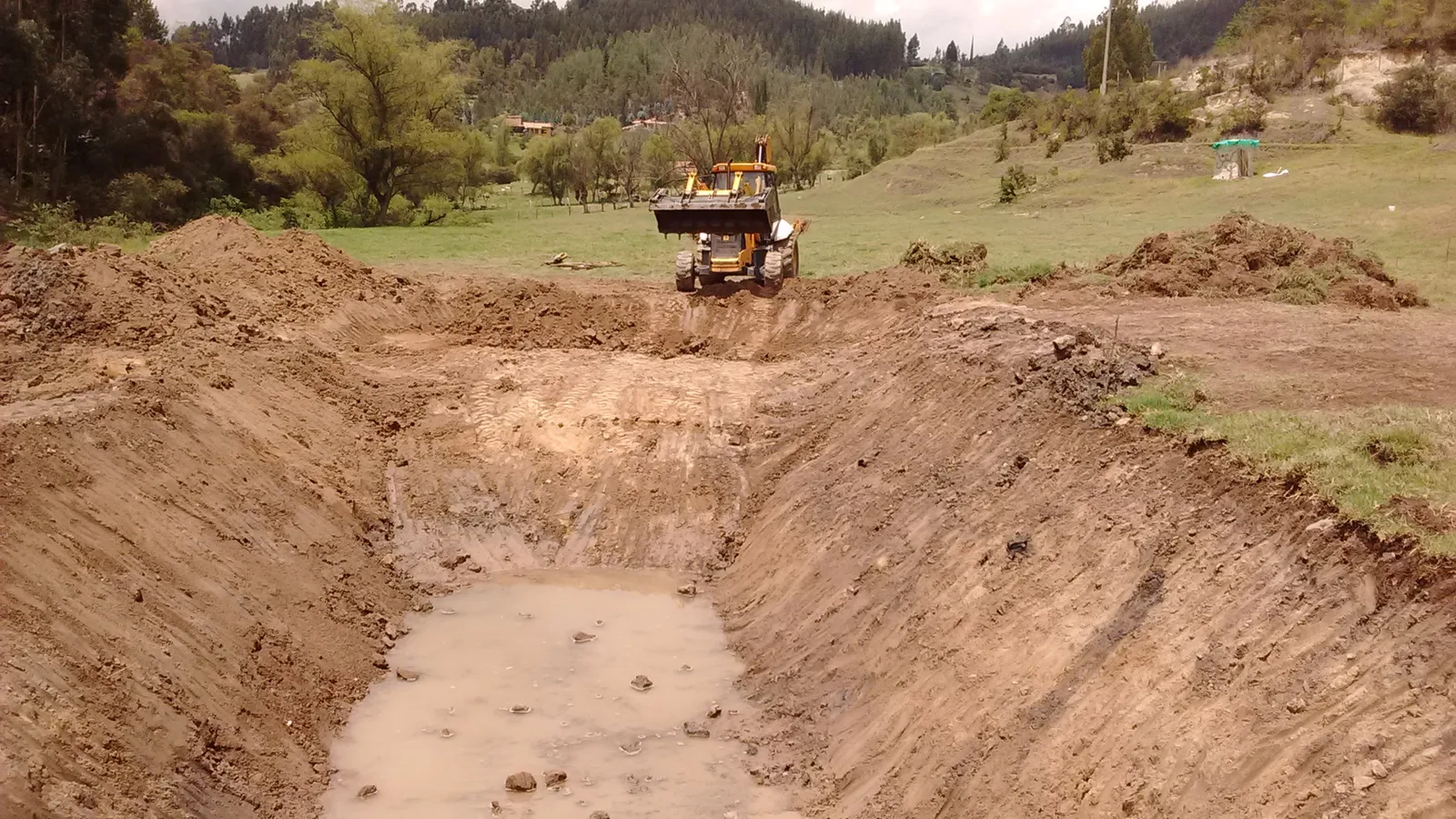
Pond construction around Richmond, Texas is mostly ranch and acreage work. Owners south and east of town want a stock tank that holds water through August. Others want a bigger recreational lake to fish and look at from the house. We dig both with large excavators, and our smallest weighs 50,000 pounds. Dirt that comes out gets used on site or hauled off on our own trucks. Fort Bend clay is good pond ground because it seals and holds water. That is the biggest thing working in your favor here. We have built ponds and lakes for private ranches for years.
A pond is a dirt job before it is a water feature. Depth and the core of the dam decide whether it holds. Shallow ponds go green and dry up. We build with depth and shape the banks so they hold their line. The spillway gets sized for a Brazos country rain. Most Richmond area ponds we quote sit on acreage. Ranchettes and estate tracts are the usual setting. A pond that size takes weeks of machine time, not an afternoon. Our minimum project runs about $10,000, which lines up with a real pond.
Tell us about your project — we’ll get right back to you.
The clay under most Richmond acreage is what makes a pond work here. Water sits on clay instead of running through it. That is a headache for a building pad and a gift for a pond. We watch the soil in the hole as we dig. Sand seams show up in Brazos bottom ground. Where we find one, we key the dam into good clay below it. A pond built on sand will drain no matter how big you dig it. Getting that right at the start beats fixing it after the first dry summer.
Depth is the other half. A shallow pond in this heat warms up and loses water fast. We dig Richmond ponds deep enough to hold a cool bottom through late summer. Eight to twelve feet in the deep end is a common target for a fishing pond. Banks get cut on a slope that holds when the water drops. We leave a shelf for structure if you plan to stock it. Those are dirt decisions, and they are hard to change later. The machine time is the same either way, so it pays to plan it once.
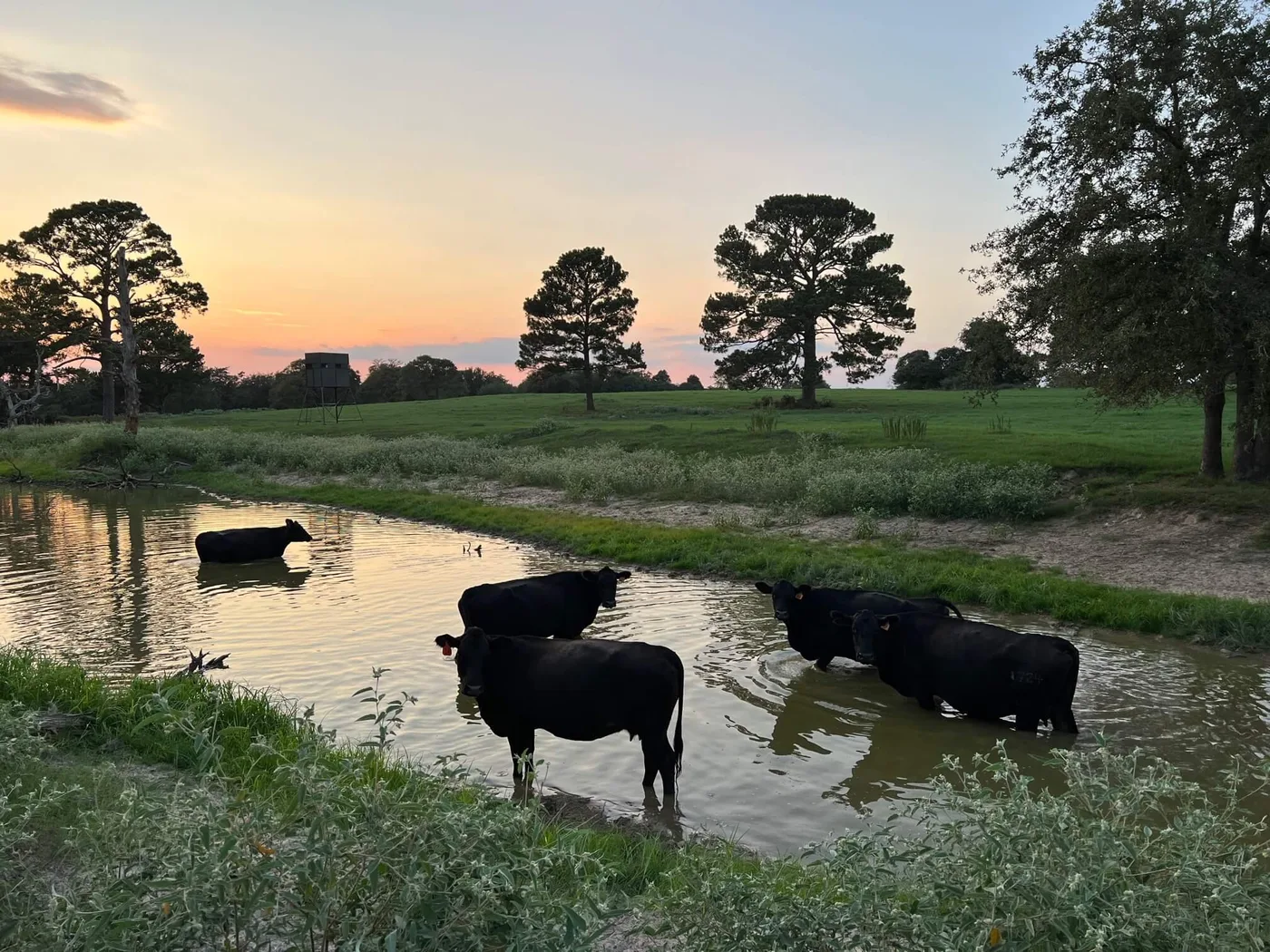
Richmond sits at the edge of real ranch country. Head south on FM 762 past the George Ranch and the tracts get bigger. Out toward Booth, Crabb and Thompsons you find pasture and acreage homesites. Those places want a stock tank for livestock or a lake for the family. A stock tank has one job, which is water for animals through a dry stretch. A recreational lake has to look right from the porch and fish well. We build them differently and the price follows that. Both start with the same question, which is where the water comes from.
Most Richmond area ponds fill from runoff off the surrounding land. We look at how much ground drains toward the site before picking a spot. Too little watershed and the pond never fills. Too much and the dam has to pass real water. Flat Fort Bend ground makes both problems common. Sometimes we cut a swale to route more water in. Sometimes we move the pond fifty yards to catch a natural low. That decision happens before a bucket goes in the ground. It is the cheapest change you will ever make on a pond.
A one acre pond ten feet deep can move more than ten thousand cubic yards. That dirt has to go somewhere. On a Richmond ranch it usually goes to good use on the same property. We build a house pad, raise a barn site or cap a low driveway with it. Spreading it on site saves the cost of hauling it away. Where there is more than the property needs, our trucks take the surplus. We run our own fleet, so that haul prices into the same job. Planning where the spoil goes changes the whole budget.
That is also why pond work and dirt work go together on acreage. While the excavators dig, the trucks are already on site. Owners often add a ranch road, a pad or a drainage cut in the same trip. Moving equipment onto a Richmond property costs money either way. We would rather do the whole list at once. It also keeps one set of tracks across your pasture instead of three. On big projects we run around the clock. That keeps a long dig from stretching across two seasons. A pond is finished when the last yard is placed.
Free, no-obligation estimates throughout Fort Bend County.
(281) 750-6510From the first look at the ground to the last pass of the grade, here is exactly how it goes.
We meet you at the property and read the job off the ground itself: what is growing, where water sits, how trucks and excavators get in. Big dirt work prices off what is really out there.
You get a free quote with a real number and a real plan: what gets dug or cleared, how many loads move, where the dirt comes from or goes. It holds unless the scope changes.
The equipment shows up when we said. Excavators dig, trucks run in rotation, and on deadline jobs we run shifts around the clock until the volume is moved.
The last pass matters as much as the first load. Pads compacted and holding elevation, ponds shaped and ready for water, ground graded so it drains. We look at the finished work with you before we leave.
What Richmond property owners ask us most about ponds & lakes. Don't see yours? Give us a call — we're happy to help.
A pond you have been putting off, a pad that needs building, land that needs clearing, or a job that needs truckloads of select fill? Call or send the form. Tell us where the property is and what you want the land to do, and we will set a time to come look at it.
Tell us about your project — we’ll get right back to you.